Zebra ZT111
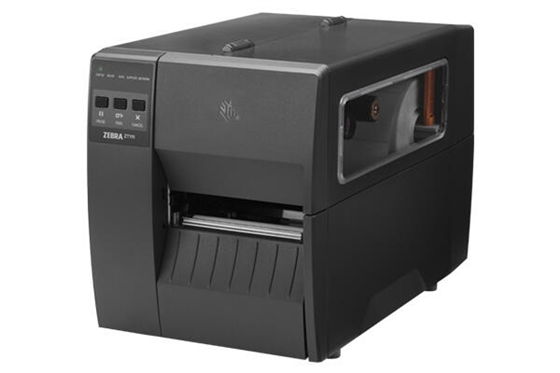

Budget-smart industrial printing with the features needed for dependable 4-inch labeling.
The Zebra ZT111 combines a durable metal frame, compact industrial design and straightforward three-button interface at an entry-level price. Choose direct thermal or thermal transfer and 203 or 300 dpi to match the labeling workflow.
Field-installable wireless and media-handling options let the printer evolve with changing requirements, while Zebra Print DNA Basic tools simplify setup, security and operation.
See the ZT111 industrial printer, touch interface and serviceable design.
Key Specifications
- Print method: Thermal transfer and direct thermal
- Resolution: 203 dpi; optional 300 dpi
- Maximum print width: 4.09 in. / 104 mm
- Print speed: Up to 10 ips at 203 dpi; up to 6 ips at 300 dpi
- Media and ribbon handling: 0.75–4.50 in. media; 8 in. roll OD on a 3 in. core or 6 in. OD on a 1 in. core; 450 m ribbon
- Connectivity: USB 2.0, RS-232 serial, 10/100 Ethernet, USB Host and Bluetooth Low Energy; optional 802.11ac Wi-Fi or second Ethernet
- Duty / application fit: Light-industrial labeling in manufacturing, transportation and logistics, healthcare and retail operations
- Dimensions and weight: 17 × 9.5 × 11 in.; 17 lb
- Warranty: Zebra limited warranty; confirm current regional terms for the selected configuration
In the Box
- Zebra ZT111 industrial printer in the selected configuration
- Installed communication and media-handling hardware only when specified by the selected option
Media, ribbon, cables, power cords and optional accessories are sold separately unless the selected option explicitly states they are included.
Versatile to Meet Your Evolving Needs
Configure Your Way
Standard Ethernet, serial, USB, USB Host and Bluetooth Low Energy support common industrial connections. Optional 802.11ac Wi-Fi or a second Ethernet interface extends deployment choices.
Handle More Media and Applications
Select tear, cutter or peel handling. ZT111 configurations support 203 or high-detail 300 dpi printing.
Effortless to Integrate and Operate
Simple Status Interface
A three-button keypad and five status LEDs provide quick visibility and straightforward control with minimal training.
Easy Media and Ribbon Loading
A side-loading supply path, enlarged viewing window and bi-fold cover simplify replenishment and help the printer fit into constrained work areas.
Easy to Manage
Zebra Print DNA
Zebra Print DNA tools support setup, integration, remote configuration, troubleshooting and security across distributed printer fleets.
Connect to Industrial Networks
Optional wireless or second-Ethernet cards support evolving network requirements without replacing the base printer.
Performance You Can Count On
Maximum Throughput and Productivity
Fast output, 256 MB SDRAM and 256 MB Flash help keep demanding print jobs moving, while adjustable transmissive and reflective sensors support varied label stocks.
Rugged Industrial Durability
A metal frame, durable plastic enclosure and tool-less platen and printhead access support sustained use and simpler maintenance in light-industrial environments.
Looking for Compatible Labels or Ribbon?
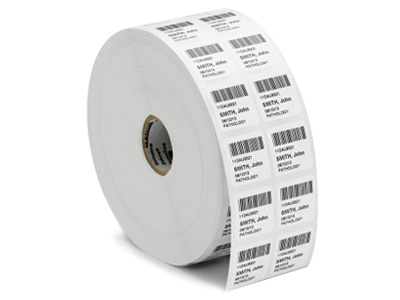
Match the selected print method, media width, roll and core size, sensing method and ribbon to the job. Use the POSGuys Label Selector Tool or contact us for help selecting supplies for a ZT111 configuration.
Shop ZT111 Models
ZT11142-D01000FZ
ZT111 Industrial Label Printer; Direct Thermal. 4", 203 dpi, Tearbar, USB, Serial, Ethernet
ZT11143-D01000FZ
ZT111 Industrial Label Printer; Direct Thermal. 4", 300 dpi, Tearbar, USB, Serial, Ethernet
ZT11142-T01000FZ
ZT111 Industrial Label Printer; Thermal Transfer. 4", 203 dpi, Tearbar, USB, Serial, Ethernet
ZT11143-T01000FZ
ZT111 Industrial Label Printer; Thermal Transfer. 4", 300 dpi, Tearbar, USB, Serial, Ethernet
Shop ZT111 Accessories
P1123335-042
Kit, Peel Option, ZT111, ZT231
P1123335-013
Kit, Printhead 300 dpi, ZT111, ZT231
P1123335-035
Kit, Ethernet Card, ZT111, ZT231
P1123335-017
Kit, Convert 203dpi to 300dpi, ZT111, ZT231
P1123335-018
Kit, Convert 300dpi to 203dpi, ZT111, ZT231
P1123335-041
Kit, Cutter Option, ZT111, ZT231
Z1AE-ZT111-3C0
ZT111 Zebra OneCare Essential 3-Year Comprehensive. (3-day in-house turnaround time)
P1123335-056
Kit, Printhead, Enhanced, 203 dpi, ZT111, ZT231, ZT231R
P1123335-057
Kit, Printhead, Enhanced, 300 dpi, ZT111, ZT231, ZT231R